Monday, February 4, 2013

The Raid

Neither my writing mate or I could get much done with this one. Sometimes the ideas don't come. The line is from John Grishom's short stories. One good thing about writing exercises when one is free writing, it doesn't have to be good. The pencil or in my cases, the fingers just need to keep moving. Like the ending, I didn't know what to do with it.


Whatever, I’ve seen worse but not by much.

I stood by the police wagon as the club participants were rounded up. There were mostly men and a few women, probably the waitresses considering their clothes. Ooops, there’s Betty, my neighbor. I’ll pretend I didn’t see her. I didn't know she worked here.

No one was really drunk, but they weren’t totally sober. Some seemed high on something, probably Coke.

Gabe, the cop who alerted me that the raid was about to happen, winked at me as he cuffed a man who kept saying, “Do you know who I am?” My editor, yelled at me as I rushed out of the paper saying I had a lead and I’d explain later.
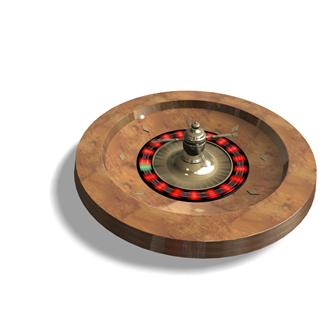

What do I mean by worse? There was something C movie about the scene. One of the old cops was carrying out a roulette wheel. Who’d have thunk it. A gambling den in Bear’s Foot, Wyoming. 

What amazed me were the people. They weren’t local by any means. Some must have come over from the fancy dancy ski lodge down the road about thirty miles. Their clothes were much too brand name with brands no one here could afford. Our little town had grown when the ski lodge went up because prices of real estate meant that no one could afford to live there.

Meanwhile I was using my phone to snap photos. I got one of Gabe. The least I could do was to make him a hero in the town paper.

I wonder what I can do with the story. There has to be a moral in there somewhere, just not sure what it is.

Blind date


For all the exercises we've done, today was the first time we've used first person. Since we are taking quotes from books, there is no reason not to. When we started doing these exercises, we were in a café and would use someone walking by as a trigger. Then when we did the exercises with Skype we tried finding a photo. A line from a book works best. This was from Seaside by Scarlett Thomas.


Thank you for dinner, I said. My grandmother’s dictate to always be polite won out over reality. I didn’t want to thank him at all.

Okay, the food had been good but then baked stuffed lobster is my favourite meal and I’m too cheap to order it when I’m paying. And I wouldn’t have had he not insisted because almost as soon as I picked up the menu I knew this blind date was going absolutely nowhere.

Why?

They say women talk a lot. He barely took a breath between sentences talking about his job, his last 22 golf games, which is only a slight exaggeration, his dog, his car. He didn’t ask one question about me. I had finished most of my main course before he even took a bite.

At least it’s only one evening wasted.
 *****
I hope she likes me he thought. I gave her enough information about myself. She had to know I earn a good salary and I’m a great athlete. And she has to be impressed with my Porsche, a classic. And when I described how I polished the car with turtle wax each Saturday morning, I hope she realized that I take care of things in my life.

Of course, the fact that she did agree to the lobster makes me wonder if she’s a spendthrift. When she said how much she loved it, what else could I do but encourage her to order it. She didn’t have to, but she did enjoy it.
 
She eats awfully fast. She was almost done before I even got started.

I doubt if I’ll ask her out again, although I’m sure she’ll be disappointed.

Revival


This February 4th exercise came from a line in a collection of John Grisham stories. My writing mate in the south of France is suffering under the Tramane with winds of 120 K per hour. In Geneva I look out my window and see snow. 
 
The opening was without fanfare…

He hadn’t wanted to go in the first place because it was just too damn hot, but his small town was trying to call attention to the fact there was a town centre with stores even. Most of the snowbirds that came down in winter never discovered this part of town. They stayed on the main highway with their cookie cutter shopping centres that had mostly the same stores, with about the only difference the age of the centre. People always flocked to the new ones and the older ones would die, and then be rebuilt as a new one.

However, his girlfriend Alice, insisted that she was going to make a success of Read, a bookstore located in the centre where there was still one bakery. All the other stores had been boarded up for years. Back in the twenties, this had been a postcard town centre but somewhere because of the depression, WWII and turning Florida into an old age home, one by one the cente had shifted.

John was one of the original residents, born and raised as they say. When he played golf with the snowbirds some of the retirees thought he was from somewhere else because they all were. He thought of them as old, and he knew his sons thought of him old too, but he didn’t think of himself that way at all.

Alice didn’t think of him as old, thank God. She was a young snowbird, fed up with Maine winters. She’d moved down with a nest egg and had convinced Mayor Anita that the dead centre needed to be recreated as a tourist attraction.

Alice's store would be the first. A gallery would be opening in a few days, and a druggist fed up with chain policies, was opening her own drug store complete with old fashioned soda fountain. 

Lisa, another snowbird who had run a bridal shop up north was going to open a dress shop, not a bridal store because the number of weddings were outdone by funerals. Alice had doubts about the success of that one. 

The Mayor had been convinced that the centre needed things to attract snowbirds there, a concert in the gazebo, a town barbecue, a tennis tournament celebration, huge screens for an outdoor movie night.

There would be fanfare then or so Alice hoped. John did too

Friday, February 1, 2013

Pinky


My writing partner gave me the line. "Our cat pinky was hit by a car."

No surprise. Pinky always played kamikaze with cars. However, hit by the car, wasn’t totally accurate. Pinky hit the car. He ran into it, bouncing off the wheel.

Rita, our neighbor saw the whole thing. She used her cell to tell me that Pinky was laying dazed in the gutter. The street where Pinky decided to play bullfight with him as the bull and the car as the toreador only had room for one car. Houses with the traditional picket fences were on each side.

We rushed out. Rita was standing by the cat. She explained what she'd seen. She took a tissue from her pocketbook and blew her nose.

My wife reached down and touched him. “He’s breathing.”

“He probably knocked himself out,” my wife said.

“I doubt if broke anything except his skull,” Rita said. She liked Pinky who often scrunched extra meals from her. When we first moved there, she thought Pinky was a stray until one day I was over at her house to return a dish she'd left at our place and Pinky sauntered in. “What are you doing here?”

“He’s a stray,” she’d said.

“Stray hell, he’s ours.”

“Con artist,” she’d said to him.

My wife ran to get a board so we could move him without doing much more damage. We put him in the car and headed to the vet. By the time we’d arrived, Pinky had come to, but we still went in.

“He seems okay,” the vet said. She was new in town. “But I suspect he’ll have a hell of a headache.”
She kept him overnight for observation. Later we would see Pinky sit by the side of the road. He never crossed the street again. 


The Newcomer


The writing exercise was started with the line: "The reviews ranged from good to ecstatic."

Of course they did. Bill, the editor of the local paper was married to Gina, the actress in the little theatre groups who always had a leading role. It wasn’t that Gina was that great an actress but the company knew that as long as she was in a play, Bill would write good things about it, and that would mean the townspeople would be more apt to pay for tickets for their next production.

The group usually put on light comedies, some classic stuff like Neil Simon plays. 

Now there was a new element in the group that seemed to avoid the normal battles of many little theatre groups.

Jason Hanson, had moved to this small Maine village from New York, and he and his wife had joined the Down East Players. He was in his middle fifties and claimed to have been associated with a number of off Broadway productions.

Fred Anderson, who had been the director of the Down East Players for the last 20 years, wanted to like Jason, wanted to say he was delighted to have some backup, but he couldn’t. 

Jason was stomping on his territory, taking over his baby. Fred was never one to lie, so he stuck to things like, “Jason has an interesting background.”

The group was meeting at the clubhouse/theatre in mid-January. The meeting before had been cancelled because of a blizzard. Everyone had brought a nibbly and the treasury provided wine.

“You’ve never done a musical,” Jason said. “Maybe we should try something like Cats or . . .”

Aha, Fred thought. “That’s interesting. Sally, do you know memories?”
 
Sally, a woman in her forties who considered some of her best friends ice cream, cakes and cookies, looked at Fred. She knew he knew what her voice was like.

She took a deep breath. “Memories, not a sound from the pavement.” If she'd hit one right note no one would have known it.
 
“Thanks,” Fred said.
In turn he asked three others to sing the same thing. Betty was the closest to singing something people might want to listen to, but even she hit several wrong notes. Fred had gone caroling with her at Christmas where she'd carried the group.

When she finished she winked at him.

“Maybe not a musical,” Jason said. The others nodded.